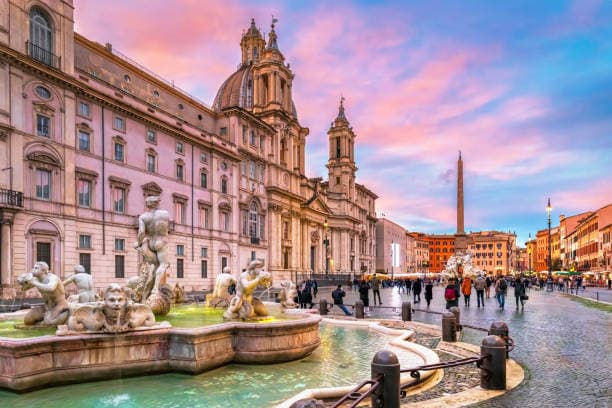
Rome stacks two thousand years on top of itself - ruins beside cafés beside apartment blocks - best handled a neighborhood at a time, not a checklist.
A few things decide already knows about Rome before it even runs a live search - grounded background, not a substitute for the price checks a real itinerary still runs.
Getting around
Rome's historic center is compact and best done on foot; the metro has only two main lines and doesn't reach many central sights directly because of archaeological restrictions on digging.
What things cost
A "coperto" (cover charge, roughly €1-3/person) is standard and legal at sit-down restaurants; it's not a scam, but an additional service charge stacked on top of it at touristy spots can be.
Tap water ("acqua del rubinetto") is safe and free to request in restaurants; bottled water is often pushed by default and adds several euros per meal if you don't specify.
Tourist-trap watch
Restaurants with hosts aggressively inviting you in from the street, especially around Trevi Fountain, Piazza Navona, and right beside the Colosseum, are reliably tourist-priced with mediocre food - a few streets away (Trastevere, Monti) tends to be both cheaper and better.
Worth knowing
The Colosseum, Roman Forum, and Palatine Hill share one ticket; booking a timed-entry slot in advance avoids the worst of the entry queue, especially in summer.
Practical
Many churches and some sights enforce a dress code (shoulders and knees covered) - this applies even in summer heat and is strictly enforced at St. Peter's Basilica.
Dietary notes
Roman cuisine is meat/dairy-heavy (carbonara, cacio e pepe, amatriciana, saltimbocca) - vegetarian options exist but require more deliberate seeking outside the Jewish-Roman (Ghetto) area and modern trattorias.
Plan a trip to Rome →decide isn't limited to these cities - tell it any destination and it runs the same live price checks either way.
 decide